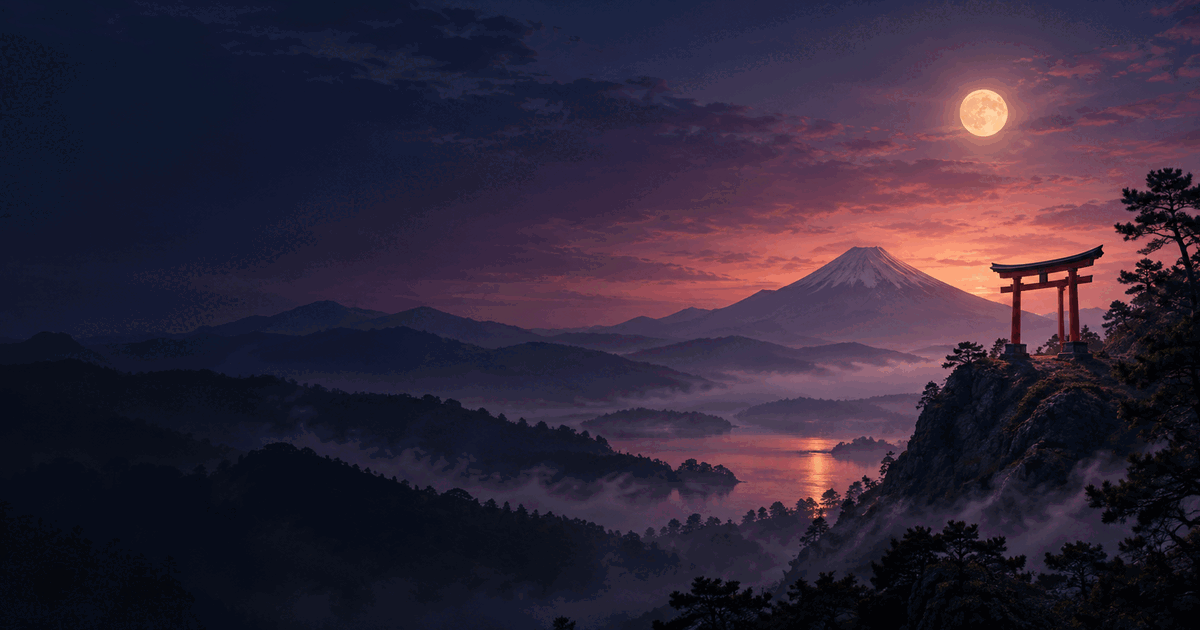
The word Reiki is written 霊気 and joins two ideas: rei (霊), meaning spirit or the universal, and ki (気), meaning life energy. Together they are usually translated as "universal life energy."
Reiki refers both to that energy and to the practice of working with it. In a session, the practitioner rests their hands lightly on or just above the body and moves slowly through a series of positions. The tradition describes this as supporting the natural flow of ki to encourage relaxation and balance.
The practice was developed in Japan in 1922 by Mikao Usui, who is said to have arrived at it after a long retreat of fasting and meditation on Mount Kurama, near Kyoto. He spent his remaining years teaching it in Tokyo, and from there it passed through a small number of teachers — most importantly Chujiro Hayashi and Hawayo Takata — before spreading around the world. What began as a quiet Japanese discipline is now practiced on every continent.
At its heart, Reiki is gentle and undemanding. It asks nothing of the person receiving it but to rest, and nothing of the practitioner but a calm, attentive presence. There are no strenuous techniques, no equipment, and no beliefs one must hold. For many people this simplicity is part of the appeal — it is a practice that meets you where you are.
"Reiki is not tied to any religion and can be practiced by anyone seeking greater inner peace, clarity, and well-being."
How it works
The idea of ki — the same concept as the Chinese qi — runs through much of East Asian thought. Reiki frames itself as a way of channeling and supporting that energy through the hands, rather than directing it by force. Practitioners describe themselves less as a source and more as a channel.
The concept of ki is not unique to Reiki. It threads through much of East Asian culture — the same vital energy that traditional Chinese medicine calls qi, that the martial arts cultivate, and that practices like qigong and tai chi work with. Reiki draws on this shared background rather than inventing an idea of its own; what is distinctive is its gentle, hands-on, meditative approach.
These are ideas from within the tradition, not medical claims. There is no accepted physical measurement of such an energy, and Reiki sits outside conventional medicine. It is best understood as a practice for relaxation and reflection — genuinely calming for many people — and nothing here is a substitute for professional care.
What a session is like
You stay fully clothed and simply lie down or sit comfortably. The room is usually quiet and dimly lit. Most people describe a session as calm and slow — quiet time, gentle hands, and rest. A typical session runs from a few minutes to about an hour.
People experience it in different ways. Some feel warmth spreading from the practitioner's hands, a faint tingling, or a sense of heaviness as the body relaxes; others feel very little and simply enjoy the stillness. It is common to lose track of time, or to drift toward sleep. None of these responses is more "correct" than another — the practice is about rest and ease rather than any particular sensation. Afterward many people feel calm and unhurried, and are often encouraged to drink some water and take a moment before standing.
You lie down or sit, fully clothed, in a quiet room.
The practitioner moves slowly through a set of hand positions.
You simply relax; many people feel warmth or drift toward sleep.
What Reiki is not
Not a religion, and it requires no particular belief to take part.
Not a medical treatment or a replacement for professional care.
Not massage or manipulation — the touch is light and still.
Frequently asked questions
What does the word Reiki mean?
Reiki is written 霊気 and joins rei (霊), meaning spirit or the universal, with ki (気), meaning life energy. Together they are usually translated as “universal life energy”, and the word names both that energy and the practice of working with it.
Do I need to believe in anything to receive Reiki?
No. Reiki asks nothing of the person receiving it but to rest. It is not tied to any religion and no beliefs are required.
Who developed Reiki?
Mikao Usui developed the practice in Japan in 1922, after a long retreat of fasting and meditation on Mount Kurama, near Kyoto. It later passed through teachers such as Chujiro Hayashi and Hawayo Takata before spreading around the world.